
Introduction
Imagine earning a full year’s salary and not paying a single rupee in taxes. Sounds like a dream, right? Well, Budget 2025 has turned that dream into reality for millions of salaried taxpayers. With the Finance Minister announcing that earnings up to ₹12.75 lakh under the new tax regime remain tax-free, middle-class families now have more room to breathe financially.
In this article, we’ll explore the highlights of Budget 2025, from revised tax slabs and rebates to the impact on savings, investors, and even how Excel-based software can simplify your tax preparation. Let’s dive right in.
Table of Contents
| Sr# | Headings |
| 1 | Overview of Budget 2025 |
| 2 | Why Budget 2025 Matters for the Middle Class |
| 3 | Higher Tax Rebate: What Changed? |
| 4 | Basic Exemption Limit Raised to ₹4 Lakh |
| 5 | Standard Deduction and Its Impact |
| 6 | New Income Tax Slabs 2025 Explained |
| 7 | How Much Tax Can You Actually Save? |
| 8 | Automatic Income Tax Preparation Software in Excel |
| 9 | Features of the Excel-Based Tax Utility |
| 10 | Simplification Through the New Income Tax Bill 2025 |
| 11 | Impact on Government Employees |
| 12 | Benefits for Non-Government (Private) Employees |
| 13 | Effect on Investors and Mutual Funds |
| 14 | Challenges and Missed Expectations |
| 15 | Conclusion: A Balanced Step Toward Relief |
1. Overview of Budget 2025
On February 1, 2025, Finance Minister Nirmala Sitharaman presented her eighth consecutive Union Budget. Among many announcements, the star reform was undoubtedly the tax relief under the new regime. The basic exemption limit jumped from ₹3 lakh to ₹4 lakh, and the rebate threshold increased to ₹12 lakh (₹12.75 lakh for salaried taxpayers).
This change means that individuals earning up to ₹1 lakh per month effectively pay zero tax.
2. Why Budget 2025 Matters for the Middle Class
The middle class often feels squeezed—too “rich” for subsidies but not wealthy enough to enjoy luxuries without planning. By raising the tax-free threshold, the government directly puts more disposable income into people’s pockets.
Think of it like giving a family an extra month’s salary each year—money that can go toward savings, education, or even small luxuries that were once postponed.
3. Higher Tax Rebate: What Changed?
Previously, taxpayers under the new regime enjoyed rebates only up to ₹7 lakh. With Budget 2025, the rebate limit soared to ₹12 lakh. That’s almost double the relief and a massive win for salaried individuals.
Transition example: Not only does this reduce tax liability, but it also encourages more people to opt for the new tax regime.
4. Basic Exemption Limit Raised to ₹4 Lakh
The basic exemption limit—the income level below which no tax is payable—has now risen to ₹4 lakh.
Earlier: ₹3 lakh
Now: ₹4 lakh
This shift directly reduces the tax burden and gives breathing space, especially for those at the lower end of the salary spectrum.
5. Standard Deduction and Its Impact
Thanks to the standard deduction of ₹50,000, salaried individuals can earn up to ₹12.75 lakh annually and still remain tax-free.
This simple deduction ensures that routine employment expenses don’t weigh taxpayers down.
6. New Income Tax Slabs 2025 Explained
Here’s how the revised slabs look under the new regime:
- Up to ₹4 lakh → No tax
- ₹4–8 lakh → 5%
- ₹8–12 lakh → 10%
- ₹12–16 lakh → 15%
- ₹16–20 lakh → 20%
- ₹20–24 lakh → 25%
- Above ₹24 lakh → 30%
Transition: Clearly, these slabs are designed to progressively reduce burden while rewarding middle-income earners.
7. How Much Tax Can You Actually Save?
Let’s break it down:
- Earn ₹12 lakh → Save ₹80,000 (100% of previous tax).
- Earn ₹18 lakh → Save ₹70,000 (30% of earlier tax).
- Earn ₹25 lakh → Save ₹1.1 lakh (25% of earlier tax).
Transition: As you can see, Budget 2025 doesn’t just favour the lowest earners—it also rewards higher income groups with meaningful savings.
8. Automatic Income Tax Preparation Software in Excel
Manually calculating taxes can be frustrating. That’s why many professionals now rely on Automatic Income Tax Preparation Software in Excel.
This tool, updated as per Budget 2025, makes filing easier for both government and non-government employees.
9. Features of the Excel-Based Tax Utility
Here’s what makes this software so useful:
- Adheres to Budget 2025 guidelines.
- Works for both old and new regimes under Section 115BAC.
- Prepares Form 16 (Part A & B)
- Calculates House Rent Allowance (HRA) exemption under Section 10(13A).
- Offers a Salary Sheet for easy management.
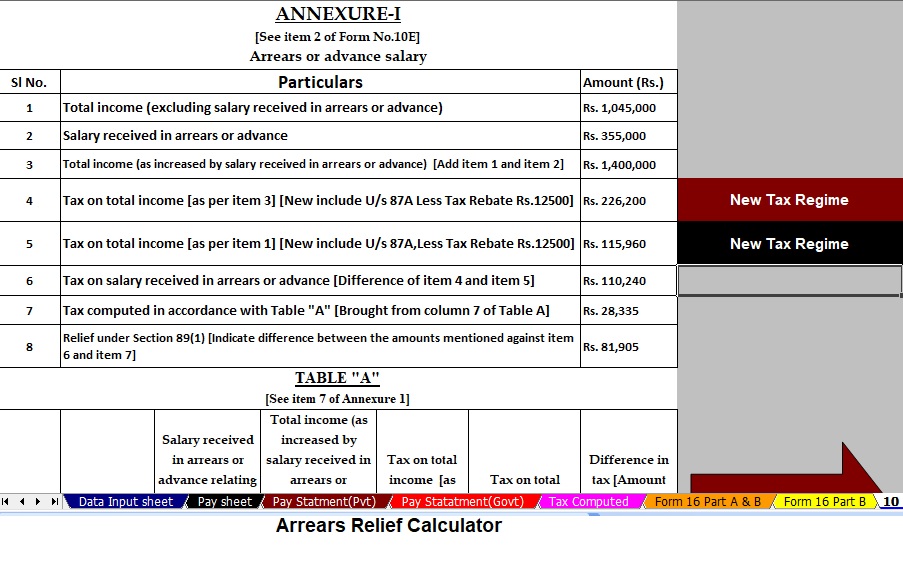
- Provides Arrears Relief Calculator (U/s 89(1)) with Form 10E.
- Generates an Income Tax Computation Sheet in minutes.
Transition: In short, this tool saves you time, reduces errors, and ensures compliance.


10. Simplification through the New Income Tax Bill 2025
The government also announced a new Income Tax Bill, aimed at making tax laws simpler, reducing disputes, and easing compliance.
This step shows a clear intention to modernise India’s tax system.
11. Impact on Government Employees
Government employees, who often deal with structured salary formats, benefit greatly. The Excel utility allows them to auto-calculate arrears, generate Form 16, and ensure seamless compliance.
12. Benefits for Non-Government (Private) Employees
Private-sector workers often struggle with tax calculations. With the Excel utility, they can easily manage deductions, claim HRA exemptions, and even plan investments better.
13. Effect on Investors and Mutual Funds
With more disposable income, people will likely invest more in mutual funds and stocks.
However, investors had hoped for reforms in capital gains tax and indexation benefits for debt mutual funds. These expectations remain unfulfilled.
14. Challenges and Missed Expectations
While Budget 2025 delivered big wins, it missed out on addressing:
- Capital gains tax reforms.
- Indexation benefits restoration.
- Broader relief for long-term investors.
15. Conclusion: A Balanced Step Toward Relief
To sum up, Budget 2025 strikes a balance. On the one hand, it provides massive tax relief to the salaried class; on the other, it ensures fiscal discipline by keeping certain reforms pending.
For the middle class, this is a game-changer—a budget that finally recognises their contribution and eases their financial burden.
FAQs
- What is the new tax-free limit in Budget 2025?
The tax-free limit has been raised to ₹12 lakh under the new regime, or ₹12.75 lakh for salaried employees after the standard deduction. - How does the Excel Income Tax Software help?
It automatically calculates taxes, generates Form 16, prepares arrears relief, and ensures compliance with Budget 2025 rules. - Will senior citizens benefit from Budget 2025?
Yes. Higher exemption limits and rebates mean senior citizens enjoy more disposable income and reduced tax liabilities. - Did Budget 2025 bring changes for investors?
While disposable income may lead to higher investments, the budget did not address capital gains tax reforms or indexation benefits. - Is the old tax regime still available?
Yes, taxpayers can still choose between the old regime and the new regime, depending on which offers them greater benefits.

